A piping system that runs quietly at ambient temperature can bind, buckle, or load its equipment connections once it reaches operating temperature. All pipe materials expand and contract as media temperature and ambient conditions change, and a design that ignores that movement does not eliminate it. It simply pushes the problem toward the nearest weak point, which is often a nozzle, a support, or a joint that was never intended to take the load.
Expansion planning treats movement as a design input. That applies to a brand new run, a tie-in to an existing header, and a capacity upgrade that changes what a line carries. The earlier the movement is understood, the cheaper it is to route around it.
Why Thermal Expansion Belongs in the Early Design Conversation
Thermal expansion is a factor that every piping system design has to account for, not a specialty item reserved for long, hot process lines. Short runs, small bore piping, and utility services still move, and the forces they generate are still transmitted into supports, anchors, and connected equipment. Published guidance on piping expansion consistently frames the issue the same way: estimate the movement, decide how it will be accommodated, and select hardware that matches the decision.
Material choice changes the scale of the problem rather than removing it. Thermoplastic piping systems expand and contract as a result of media temperature changes and ambient conditions, and the same is true of metallic systems. A plastic line may need different support spacing and a different flexibility strategy than a carbon steel line, but neither system can be designed as though the temperature never changes.
Start With Routing and Anchoring Before Selecting Hardware
Guidance on expansion loop design often opens with a question that has nothing to do with loops. Where do you want the piping anchored? Anchoring is typically established at the connection to equipment, along with other locations chosen by the designer. Those anchors define the boundaries of each flexible leg, and they determine how far the pipe has to move between them.
Settling that question early pays off in three ways. It clarifies how much flexibility each section needs, it shows where the routing has room to absorb movement, and it prevents a late change from creating a section that is anchored at both ends with no way to relieve the strain. Pipe racks, trenches, and congested skids often decide the answer for you, so it helps to review layout constraints and anchoring intent at the same time.
The Main Strategies for Managing Pipe Movement
Most piping systems rely on a combination of approaches rather than a single solution. The table below outlines the common strategies and the questions worth asking during planning.
| Strategy | How it manages movement | What to check during planning |
|---|---|---|
| Expansion loops and jog routes | Adds pipe length and changes direction so the line flexes instead of pushing against its anchors | Available space, support locations, anchor placement, and whether the loop can actually move as intended |
| Expansion joints | Installs a device in the line that absorbs movement at a defined point | Selection criteria, expected movement range, installation instructions, and known failure modes |
| Supports designed for controlled movement | Allows the pipe to move in a controlled direction while restraining unwanted movement | Support type, spacing, load path, and whether the support allows the movement the analysis assumes |
| Anchors and guides | Defines where movement stops and where it is directed | Equipment connections, structural attachment points, and the resulting loads on each |
Expansion Loops and Jog Routes
Expansion loops are critical components in piping systems because they manage the stress caused by thermal expansion and contraction. A loop increases the overall resilience of a system by absorbing movement and providing flexibility, which is why it remains one of the most widely used solutions where space allows. The loop itself does not have to look like a textbook U shape. A jog route can be used to create an expansion loop, letting the designer work within the geometry that the rack or the plot actually offers.
The catch is that a loop only works if it is free to flex. Supports that are too restrictive, guides placed in the wrong spot, or an anchor that was relocated during construction can all defeat the design intent. Loop geometry, support arrangement, and anchor locations need to be reviewed together rather than as separate items.
Expansion Joints: Selection, Installation, and Failure Modes
Where space or layout rules out a loop, an expansion joint can absorb movement at a single point in the line. Selection is where most of the risk sits. Movement range, the media and environment the joint will see, and the way the joint is installed all affect whether it performs. Installation errors and incorrect selection are recurring causes of premature joint failure, so the specification should be paired with clear field instructions and a check that the installed unit matches what was ordered.
Expansion joints should be treated as engineered components, not as commodities. If a project requires a specific joint type or certification, confirm the requirement against the relevant standard or the manufacturer’s published data before the order is placed.
Supports and Anchors
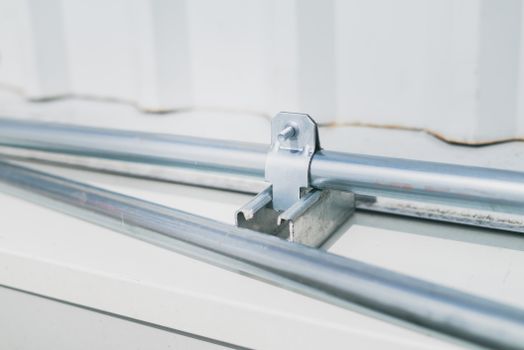
Specialized pipe supports allow for controlled movement while preventing unwanted movement, and that balance is the whole point. A support that locks a line in place can transfer thermal load into a structural member or a pump nozzle. A support that gives too much freedom can let the line wander outside its intended envelope. Anchors work the same way in reverse, establishing fixed points that give the rest of the run something to move against.
Support selection also interacts with material. Thermoplastic and other non-metallic lines may need different support spacing and support types than steel lines carrying similar media, because the movement and the load distribution are different. The support schedule should be developed from the same temperature and material assumptions used in the flexibility review.
Documenting Temperature and Material Conditions
Flexibility planning is only as good as the conditions it is based on. The design has to reflect the media temperature the line will actually see, not just the design case on the data sheet, and it should account for ambient conditions where the piping runs outdoors or through unconditioned space. Startup, shutdown, and upset conditions are worth listing alongside normal operation, because the largest movement often occurs during a transient rather than at steady state.
Material grade matters here as well. Different pipe materials respond differently to the same temperature change, and mixed-material systems introduce additional points where movement has to be resolved. Where the project involves a material or service condition the team has not handled before, that assumption should be verified with the manufacturer or the applicable design code rather than carried over from a previous job.
Component Requirements That Follow From the Movement Review
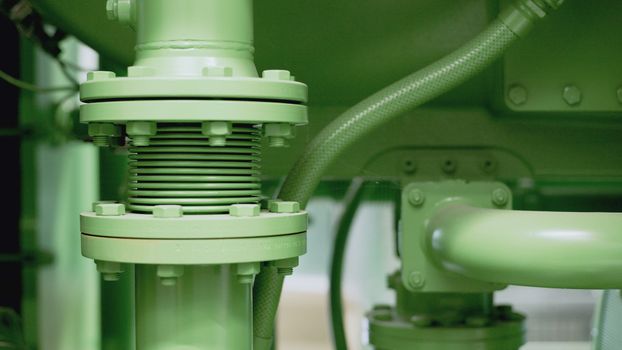
Once the movement strategy is set, the bill of materials tends to write itself. Loops and jog routes add fittings, flanges, and branch connections. Anchored sections require flanged or welded tie-in points that can be assembled in the field without fighting the pipe. Where a line is expected to move, the joints and connections near the anchors usually carry the highest demands, so specifying them with the same care as the pipe itself is worthwhile.
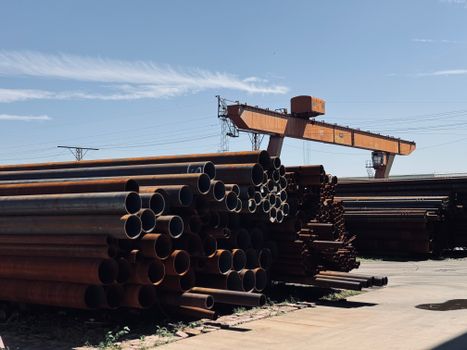
For fabricators and engineers assembling an expansion package, the practical list usually includes weld neck and slip-on flanges for the tie-in points, forged steel fittings for the direction changes, olets for branch connections off an existing header, and pipe cut to the required lengths so the loop geometry matches the drawing. Custom items per drawing are often needed when the layout is tight.
Planning Checklist Before Release to Fabrication
- Confirm the media temperature range, ambient exposure, and any transient conditions the line will experience.
- Establish anchor locations, starting with equipment connections, and confirm each one is structurally feasible.
- Decide how each flexible section will absorb movement: loop, jog route, expansion joint, or a combination.
- Match supports and guides to the movement the design assumes, including material-specific requirements.
- Review loop and joint locations against the actual rack, trench, or skid geometry, not just the plot plan.
- Translate the strategy into a component list with flanges, fittings, branch connections, and cut-to-length pipe.
- Give the field clear installation notes for any expansion joint, since installation quality drives service life.
Expansion planning is one of the few parts of a piping project where a small amount of early attention prevents a large amount of rework later. Anchors, loops, joints, and supports are all decisions that get harder and more expensive to change once the pipe is on the rack. Getting the movement analysis right before fabrication starts keeps the system doing what it was designed to do, which is to move without damaging anything around it.
Frequently Asked Questions
What causes thermal expansion in a piping system?
Pipe materials expand and contract as media temperature changes and as ambient conditions change. A line that is installed at one temperature and operated at another will change length, and that movement has to be accommodated somewhere in the system. Thermal expansion is a factor every piping design needs to account for, regardless of line size or service.
Do all pipe materials expand and contract?
Yes. All pipe materials respond to temperature changes, including thermoplastics and other non-metallic systems as well as metals. What differs is how much movement occurs and how the system is supported. Material choice changes the numbers and the support strategy, but it does not remove the need to plan for movement.
Where should pipe anchors be placed?
Anchoring is typically established at the connection to equipment, along with other locations selected by the designer. Those points define the boundaries of each flexible section and determine how far the pipe must move between them. Anchor locations should be confirmed against structural capacity and equipment load limits before the design is released.
When is an expansion loop better than an expansion joint?
Loops work well when there is space for the pipe to flex and when the layout allows a jog route to be built into the run. Expansion joints suit tight layouts where a loop will not fit. Both require correct anchoring and support, and both depend on installation quality, so the choice usually comes down to space, maintenance, and past experience.
How early should expansion planning start?
Before routing is frozen. Anchor and support decisions shape the layout, and moving a loop or relocating an anchor after the rack is detailed is far more disruptive than planning for movement from the beginning. Early review also gives procurement time to source the flanges, fittings, and pipe lengths the strategy requires.