How to Choose Air Duct Tubing That Fits the Job
To choose air duct tubing, start with the air you need to move, the duct diameter, and the route it must follow. Use rigid duct for long, straight runs where low airflow resistance matters. Use flexible duct for short runs around obstacles, but keep it stretched, supported, and free of sharp bends. For either type, check the product’s temperature and pressure ratings, insulation needs, and local code requirements before buying.
I’m Lance Vanover, CEO of Lynco Flange & Fitting, with 26 years of experience in industrial flanges and pipe fittings. That background shapes my approach to air duct tubing: get the sizing, connections, and operating limits right before installation.

Air duct tubing terms simplified:
Understanding the Main Types of Air Duct Tubing
Getting air from point A to point B sounds straightforward until you look at the physical dynamics of friction, thermal transfer, and static resistance. Just as in fluid piping, moving air efficiently requires matching your materials to the operating environment. Today’s commercial buildings, residential living spaces, and busy production shops rely on a variety of duct profiles to deliver conditioned air or extract hazardous fumes.
To understand how air conduits integrate into broader building utilities, exploring a practical guide to piping system basics gives valuable insight into how mechanical networks balance flow and velocity. When it comes to air delivery, ducting generally falls into five distinct categories: rigid metal, semi-rigid metallic, flexible wire-helix foil, thermoplastic hose, and technical fabric ducting.
| Duct Material | Typical Temp Range | Durability Rating | Flexibility | Internal Friction Loss | Common Applications |
|---|---|---|---|---|---|
| Galvanized Steel (Rigid) | -40°F to 400°F+ | Very High | None (requires elbows) | Lowest | Main HVAC trunks, central workshop dust lines |
| Semi-Rigid Aluminum | -100°F to 435°F | Moderate to High | Bendable, holds shape | Low to Moderate | Dryer vents, appliance exhaust, short equipment runs |
| Flexible Foil (Multi-Ply) | -20°F to 180°F | Moderate (tear-prone) | High (spring wire core) | Moderate to High | Final residential HVAC drops, grow spaces |
| PVC / Thermoplastic Rubber | -60°F to 275°F | High (abrasion-resistant) | High (compressible) | Moderate | Industrial dust collection, chemical fumes, shop vacuums |
| Technical Fabric (DuctSox) | -20°F to 180°F | High (textile fatigue) | Adaptable overhead | Very Low (diffused) | Open commercial spaces, food processing facilities |
For specialized industrial environments, examining manufacturer data such as the Flexible Hose, Ducting and Accessories Product Catalog demonstrates how specialized wall materials and wire reinforcements accommodate demanding mechanical requirements.
Flexible vs Rigid Air Duct Tubing Performance
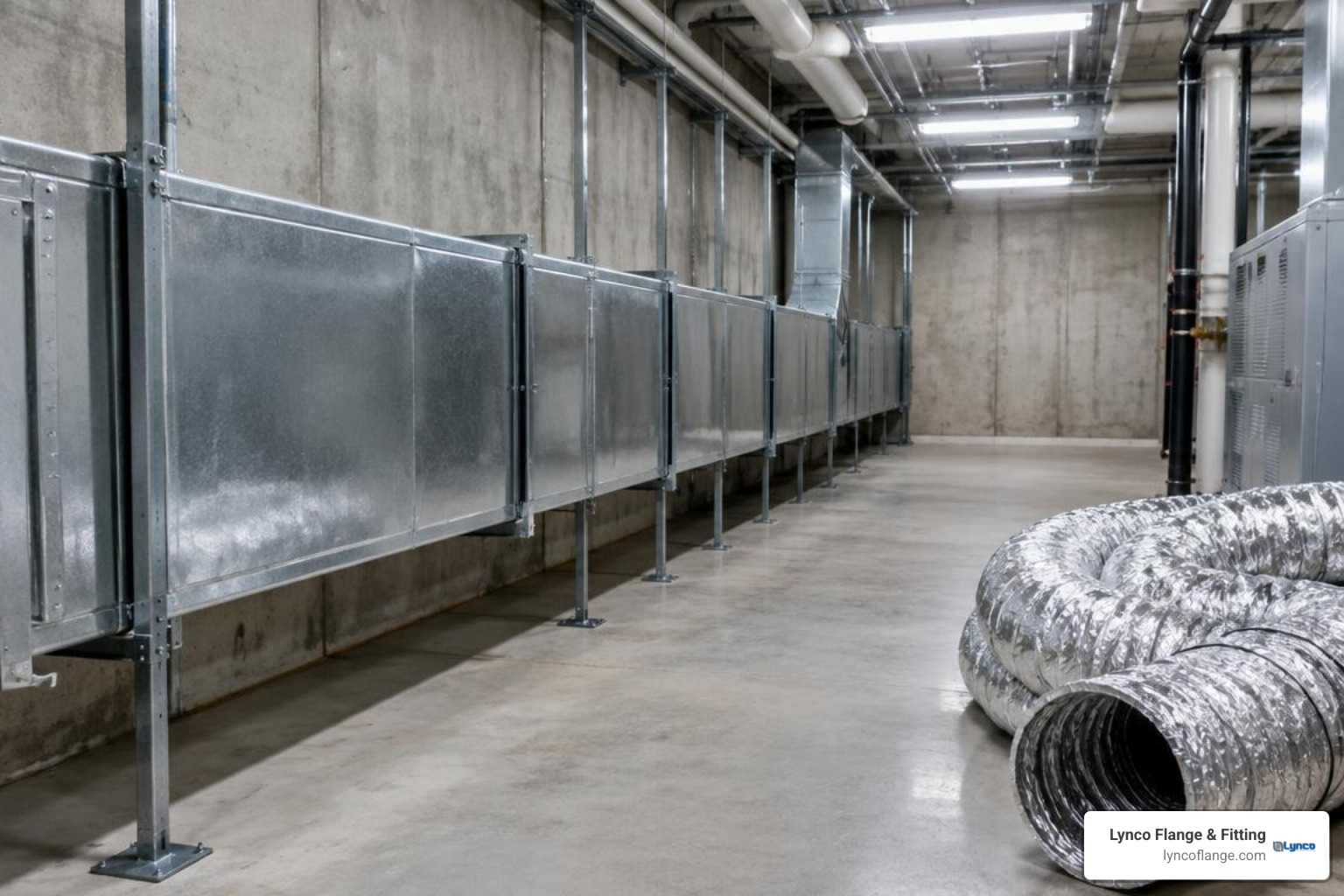
Choosing between rigid metal and flexible duct tubing comes down to balancing aerodynamic efficiency against routing convenience.
Rigid ducting, fabricated from galvanized sheet steel or spiral-wound metal, provides a smooth interior wall. This minimal surface roughness yields the lowest friction loss and static pressure drop across extended lengths. Because metal ducts maintain their shape under high static pressures, they excel in central distribution trunks and high-velocity systems where air speeds exceed 2,000 feet per minute (FPM). In heavy-duty woodshops and machine shops, rigid steel resists abrasive wear from flying chips and reduces the chance of dangerous static charge buildup.
Flexible ducting, by contrast, relies on a coated polymer or foil sleeve supported by an internal spring-steel wire helix. Flexible duct is commonly sold in boxes containing 25 feet of duct compressed into a 5-foot length, making transport and staging remarkably convenient.
However, that flexibility introduces internal ridges. If a flex run is left bunched or slack, airflow resistance skyrockets, causing significant pressure drops that force blowers to work harder. While rigid duct takes time to cut, fit, and seam with specialized elbows, flexible duct routes easily around floor joists, plumbing pipes, and structural framing. In practice, the best mechanical setups use rigid metal for the central distribution spines and short, tightly pulled flexible tubing drops for the final connections to diffusers or shop machinery.
Specialty Flexible Materials: Aluminum, PVC, and Fabric Air Duct Tubing
Modern engineering provides alternatives beyond basic sheet metal and foil sleeves:
- Semi-Rigid Lock-Seam Aluminum: Engineered with a continuous mechanical interlock, products like the flexible aluminum ducting can be pulled open, bent, and adjusted without unravelling or developing pinhole leaks. Rated for temperatures spanning -100°F to 435°F with zero flame spread, these non-combustible lines satisfy strict building codes for clothes dryer venting and high-heat appliance exhausts.
- Clear PVC and Thermoplastic Rubber (TPR): Industrial flex ducts, such as PVC Flexduct, feature heavy-duty external wear strips and clear wall formulations. A clear PVC hose lets machine operators spot chip clogs instantly in dust collection circuits. These hoses feature impressive compression ratios of up to 6-to-1 (allowing a 12-foot length to collapse down to 2 feet for storage). Thermoplastic rubber compounds like the Flexadux TR T-7 series offer broad operating windows from -60°F to 275°F while resisting chemical vapors, oils, and physical scuffing.
- Technical Fabric Ductwork: Fabric ducting systems have served industrial and commercial spaces for more than 45 years. Built from technical polyester with precision micro-perforations or directional nozzles, fabric ducts disperse air evenly along their entire length rather than dumping it through localized metal grilles. Fabric options can be manufactured with antimicrobial treatments for food-processing cleanrooms, eliminate condensation issues without external wrapping, and weigh a fraction of sheet metal.
Key Factors for Selecting Ventilation Ductwork
Selecting the right duct configuration demands a systematic look at your volume requirements, thermal demands, and physical space constraints. Reviewing 5 key considerations when installing piping systems highlights how operating environment, material compatibility, and flow dynamics determine long-term system success.

Whether you are designing a whole-house HVAC retrofit or outfitting a dedicated woodturning workshop, four critical factors dictate material selection:
- Airflow Demand (CFM): The total volume of air requiring exchange or filtration every minute.
- Velocity and Static Pressure: The internal speed and resistance the duct walls must handle without collapsing or billowing.
- Thermal Performance: The need to retain heat or prevent condensation across unconditioned zones.
- Environmental Hazards: Exposure to abrasive particles, chemical vapors, extreme ambient heat, or open flames.
Sizing, Airflow Velocity, and Static Pressure Ratings
Ductwork must match the fan or blower’s output curve. An undersized duct chokes air supply, creates annoying whistling noise, and strains blower motors. An oversized duct drops velocity below the threshold needed to keep particulate moving in exhaust systems, leading to settled dust clogs.
Understanding the importance of properly sized fittings is essential here. In standard air ventilation systems, duct sizes are classified by inner diameter (ID), available from 4 inches up to 18 inches, with 6- to 12-inch sizes being the most common across residential and light commercial work. By contrast, plastic pneumatic tubing and high-pressure lines are often specified by outer diameter (OD) to match tight push-to-connect fittings, as detailed in technical pneumatic tubing and hose guides.
Airflow velocity ratings in heavy-duty aluminum ducts can reach up to 5,000 FPM with static pressure thresholds up to 12 inches water column (in. WC). For industrial extraction involving negative suction or positive pressure discharge, specifiers rely on industrial resources like the flexible duct hose selection catalog to verify that hose wall thicknesses (ranging from 0.012 inches for light air up to 0.060 inches for heavy abrasives) will not collapse under heavy vacuum.
Thermal Insulation and Energy Efficiency Requirements
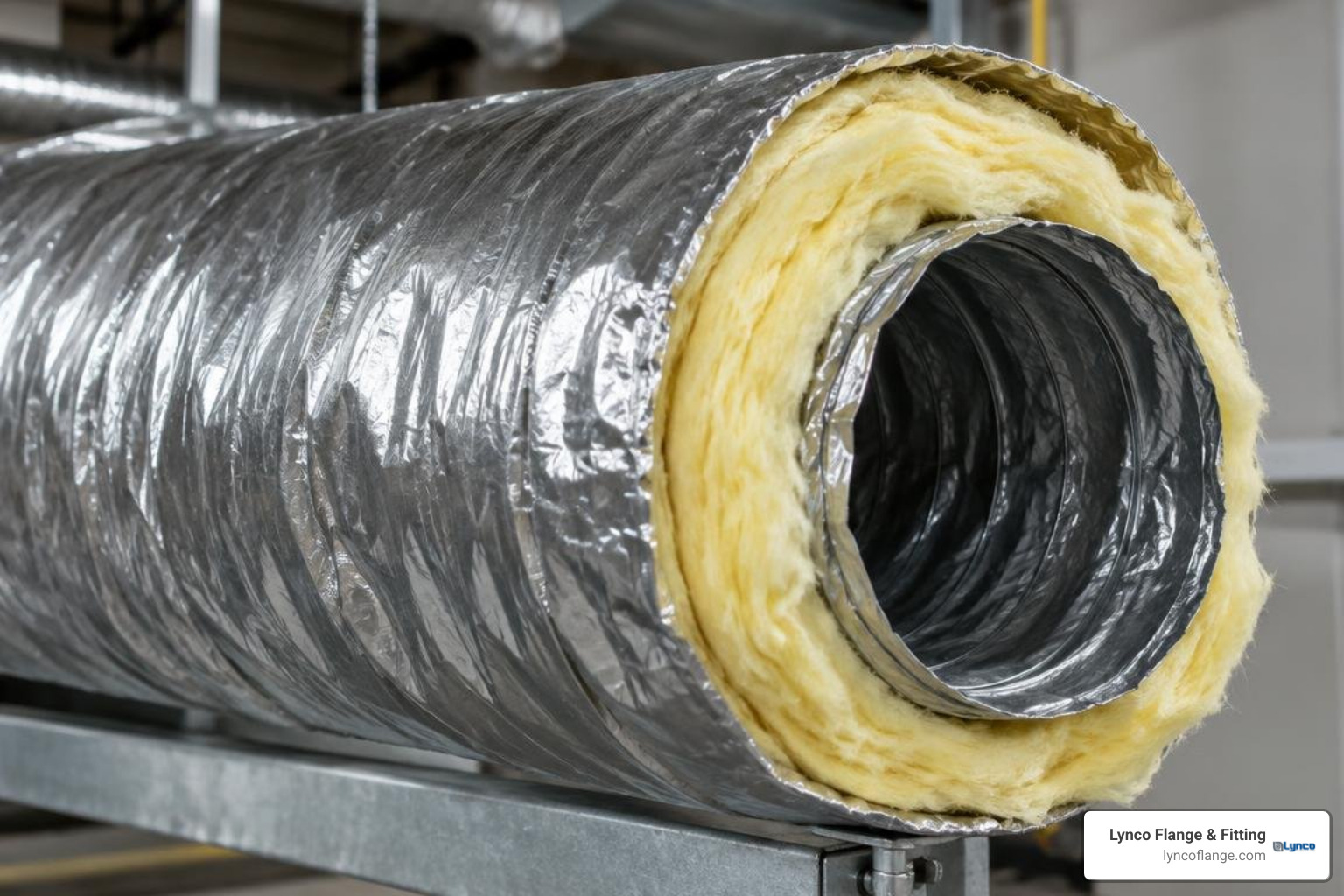
In residential and commercial buildings across the United States, air conditioning accounts for roughly 6% of all produced electricity, while comprehensive HVAC systems consume approximately 12% of total national energy. When conditioned air travels through unconditioned spaces like attics, crawlspaces, or unheated garages, thermal efficiency becomes paramount.
Non-insulated ducts running through an unconditioned attic can lose up to 40% of their generated heating or cooling capacity through conductive transfer. This thermal bleed forces HVAC compressors and furnaces to operate up to 50% harder just to satisfy thermostat settings.
To prevent energy loss and damaging surface condensation, building codes enforce thermal resistance standards:
- R-6 Insulated Ducting: Features a thick fiberglass insulation blanket wrapped around the inner core, encased in a multi-ply metallized vapor barrier jacket. Standard for moderate climate zones and interior framed drops.
- R-8 Insulated Ducting: Incorporates thicker insulation for high-exposure environments, such as unconditioned attics in extreme southern or northern climates.
- UL 181 Listing: Guarantees that the insulated flexible duct assembly meets rigorous fire safety, flame penetration, smoke generation, and structural integrity standards.
How to Properly Route and Install Duct Hose Systems
Even high-end duct materials will underperform if installed poorly. A messy route full of sagging runs and compressed bends increases resistance and cuts system output. Following safety tips for industrial environments ensures that overhead duct runs remain structurally secure, clear of moving shop machinery, and fully compliant with building codes.
Step-by-Step Layout Planning and Bending Radii
Planning the duct run systematically prevents costly routing errors:
- Map Direct Paths: Measure the direct distance between equipment take-offs and termination diffusers. Always keep flexible ducting as short and straight as possible.
- Pull Flexible Cores Taut: Flexible ducts should be stretched fully tight during installation. Leaving a 25-foot duct bunched into a 15-foot physical span creates internal corrugations that can increase friction loss by more than double compared to a fully extended core.
- Maintain Generous Bend Radii: Avoid sharp 90-degree turns. Always maintain a centerline bend radius equal to at least one to two times the duct diameter. If an abrupt directional change is unavoidable, install a rigid galvanized metal elbow fitting with turning vanes to navigate the corner smoothly without choking flow.
- Install Broad Hanging Straps: Support flexible ductwork every 4 feet using hanging straps that are at least 1.5 inches wide. Never use narrow wire, zip-ties, or bare twine directly against duct jackets, as they pinch the insulation, crush the inner core, and create severe static bottlenecks. Allow no more than 0.5 inches of sag per linear foot between supports.
Sealing Connections and Preventing Air Leakage
Air leakage at collar connections, splices, and plenums wastes energy and draws unconditioned, dusty air into the ventilation loop.
- Avoid Standard Rubber-Based Utility Tape: Traditional “duck tape” dries out, degrades, and drops off within a few heating seasons due to temperature cycling.
- Use Mastic Sealant and UL 181 Foil Tape: Coat all metal-to-metal branch collars and rigid pipe seams with water-based HVAC mastic sealant, embedding fiberglass mesh tape across larger gaps. For flexible duct terminations, peel back the outer insulation sleeve, secure the inner core to the sheet metal collar using heavy-duty stainless steel bridge clamps or tensioned nylon bands, apply UL 181A-P foil-backed tape, and pull the insulation jacket back over the joint before clamping the outer vapor barrier.
- Incorporate Vibration Isolators: When connecting rigid duct trunks directly to high-output shop blowers or air handling units, insert flexible canvas or elastomeric vibration collars. These isolators absorb mechanical vibration at the source, preventing acoustic drumming throughout structural joists.
Maintenance, Cleaning, and Long-Term System Care
Regular upkeep keeps ventilation systems running safely and efficiently. Reviewing top piping system maintenance tips provides an excellent baseline for inspecting seals, monitoring static pressure, and keeping mechanical runs clear over decades of operation.
- Semi-Annual Visual Inspections: Inspect duct pathways for sagging spans, crushed jackets, or detached support straps. Check external wear strips on shop dust hoses for abrasion thinning where hoses cross concrete floors.
- Dust Accumulation Monitoring: In woodworking and grinding shops, periodically tap rigid duct runs to detect settled dust pockets. Commercial systems can be evaluated using deposit thickness tests; industry standards set by the National Air Duct Cleaners Association (NADCA) recommend remediation when surface deposits exceed 0.75 milligrams per 100 square centimeters.
- Fabric Duct Laundering: One of fabric ductwork’s primary advantages is maintenance speed. Facility managers simply unzip modular fabric sections and run them through commercial washing machines to eliminate accumulated dust, allergens, and microbial growth without needing invasive duct-vacuuming equipment.
- Moisture and Condensation Control: Inspect insulated vapor barriers during peak summer cooling months. Any localized sweating indicates a torn outer barrier or compressed insulation core that requires immediate patching with UL-listed foil tape to prevent mold growth.
Frequently Asked Questions About Air Duct Tubing
Can flexible air duct tubing handle high temperatures and abrasive dust?
Yes, provided you choose the right specialized construction. Standard vinyl or foil flexible HVAC ducts cannot handle abrasive sawdust or temperatures over 180°F. However, semi-rigid aluminum lines handle temperatures up to 435°F with zero flame spread.
For abrasive extraction in machine shops, heavy-duty thermoplastic rubber and polyurethane hoses with wall thicknesses up to 0.060 inches and external polymer wear strips resist metal shavings, sawdust, and hot exhaust up to 275°F without puncturing.
How does non-insulated ducting impact HVAC energy consumption?
Non-insulated ducting running through unconditioned zones causes substantial conductive heat transfer. Up to 40% of the heating or cooling energy generated by the HVAC unit can be lost through bare duct walls before reaching the living space.
This thermal loss forces the blower and compressor to run up to 50% harder to hit temperature targets, accelerating equipment wear and driving up monthly utility bills. Installing R-6 or R-8 insulated duct jackets keeps air at target temperatures and eliminates surface condensation.
What is the maximum recommended length for flexible duct runs?
Industry standards from SMACNA and the Air Conditioning Contractors of America (ACCA) recommend limiting individual flexible duct runs to no more than 14 to 15 feet. Flexible duct should primarily serve as a final connection between rigid metal trunk lines and supply diffusers.
Running long continuous stretches of flexible duct builds up excessive friction resistance, leading to weak airflow at distant registers and imbalanced system pressure.
Conclusion
Optimizing air delivery across residential living areas, commercial cleanrooms, or high-volume industrial production floors relies on matching your duct geometry and material properties to system demands. Choosing rigid galvanized metal for straight main trunks gives you maximum aerodynamic efficiency, while dedicated flexible aluminum, thermoplastic rubber, or technical fabric ducts provide adaptable routing around complex framing.
When projects demand high-integrity fluid handling, process lines, and structural piping alongside mechanical ventilation, our team at Lynco Flange & Fitting delivers the technical expertise required for demanding operating conditions. Based in Houston, Texas, our engineering-focused sales team supplies industrial pipe fittings, flanges, weld connections, and forged steel products backed by rigorous ISO-compliant quality control and deep inventory.
Explore our comprehensive guide to industrial piping and duct components to discover how precision-engineered connections keep modern industrial facilities operating safely and efficiently.